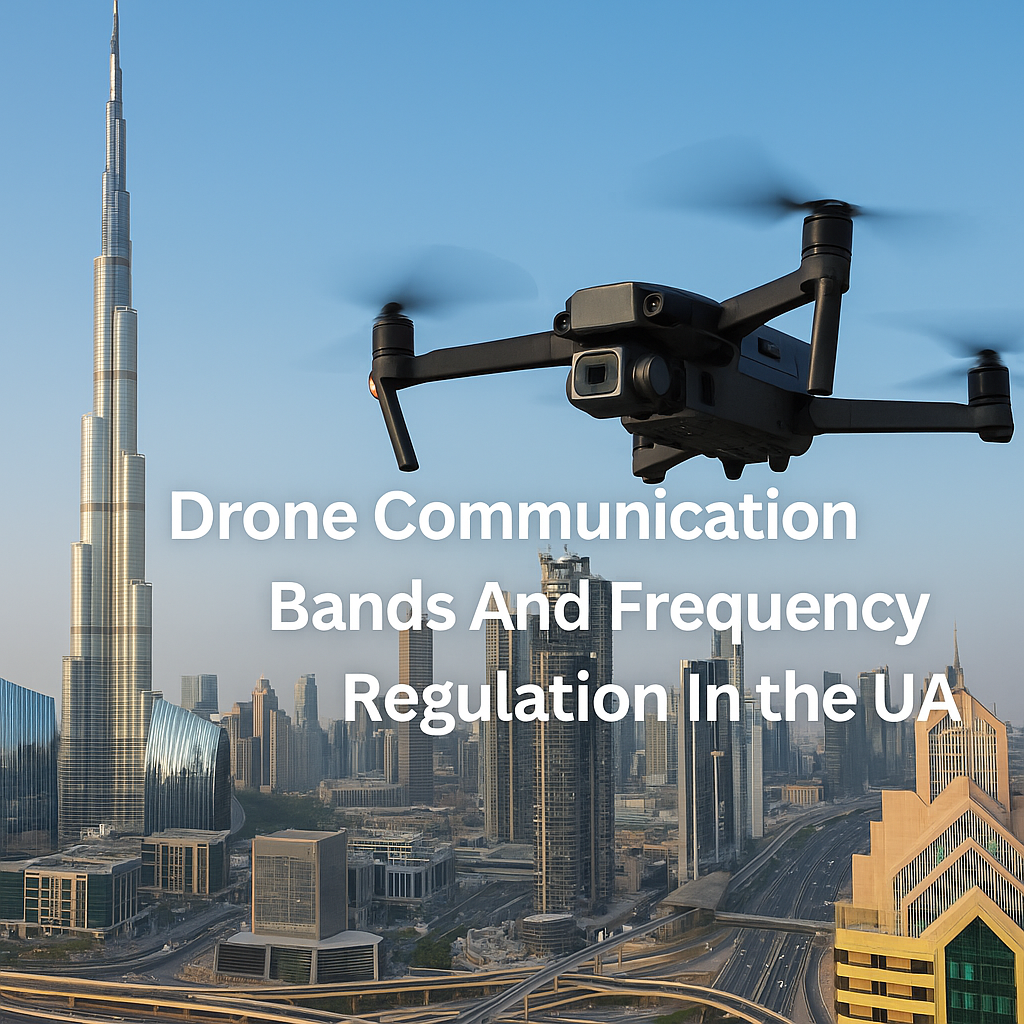
Operating drones in the UAE means more than just flying legally—you must ensure your drone’s communication systems comply with the TDRA (Telecommunications and Digital Government Regulatory Authority) and GCAA (General Civil Aviation Authority). Using the wrong radio band or unlicensed frequency can lead to hefty fines, loss of equipment, or interference issues. Here’s a complete guide to staying compliant and choosing the right frequency bands for drone operations in Dubai and across the UAE.
Why Frequency Regulation Matters
- Safety & interference: Ensures your command/control (CNPC) and video links don’t interfere with other critical systems.
- Reliability: Using authorized bands helps avoid signal dropouts, interference, or signal degradation – crucial during missions.
- Legality: TDRA requires licenses or authorizations for many frequencies; flying outside permitted bands can result in penalties. TDGRA+1
TDRA’s Key Regulations for Drone Radio Use
1. Categories of Use & Authorizations
- All Unmanned Aircraft Radio Systems (UAS) must follow Regulations on Unmanned Aircraft Radio Systems (TDRA).
- There are several categories (Basic, Advanced) and some operations require licensing, especially when using higher power or more sensitive bands. TDGRA+1
2. Permitted Frequency Bands
Table of some key permitted bands for UAS and remote communication in the UAE (subject to TDRA regulation and license where needed):
| Frequency Range | Usage Condition | Use Case Examples |
|---|---|---|
| 2.400 - 2.4835 GHz (2.4 GHz ISM band) | License-exempt or Class Authorization for many UAS (low-power, short range) | FPV, short range video feed, CNPC for hobby or basic commercial drones. |
| 5.725 - 5.875 GHz (5 GHz ISM band) | Permitted under SRD/UWB regulations with specific power/ERP limits TDGRA+1 | Higher bitrate video links, telemetry, operations that need extra bandwidth. |
| Lower HF/VHF (e.g. 26 - 27 MHz etc.) | Often used for model/control, but strict power & duty cycle limits apply. TDGRA | |
| SRD/UWB bands with strict conditions | Ultra-wideband (UWB) / Short Range Device (SRD) regulations may allow some experimental, telemetry, or non-critical communication setups. |
Power, Licensing & Conditions
- Devices must meet transmit power (EIRP/ERP) and duty cycle limits set by the TDRA. Exceeding those requires special licensing or authorization.
- For some bands (especially for advanced or long-range operations), you’ll need Authorized Frequency Spectrum Authorization from TDRA.
- The regulations include rules for interference, ensuring that any radio use does not disrupt critical infrastructure.
Practical Tips for Drone Operators
- Check the class of your drone (Basic / Advanced) to know what bands and authorization you need.
- Buy approved RF-modules or radios that list UAE frequency compliance.
- Test communication range in your operating area to avoid “dead spots” or interference.
- Keep documentation ready: your TDRA license, device specs (power, band), registration, etc.
- Stay updated: Regulations change—TDRA often updates tables & permissible bands. Always check the latest version.
Example: Using 5 GHz Video Link in Dubai
Say you’re using a 5.8 GHz video feed for your drone’s camera:
- Make sure it’s within 5.725-5.875 GHz band.
- Use a module with correct power output under the SRD/UWB rules.
- Ensure your entire R-F chain (antenna, transmitter, cabling) is certified or compliant.
- Register or get authorization if required for that power or link type.